Warning: include_once(/home/clients/4ae2c8d6ced67aaea1c30d6ecfb7d0e2/sites/web.ngoforbgeneva.org/wp-content/plugins/wp-super-cache/wp-cache-phase1.php): Failed to open stream: No such file or directory in /home/clients/4ae2c8d6ced67aaea1c30d6ecfb7d0e2/sites/web.ngoforbgeneva.org/wp-content/advanced-cache.php on line 22

Warning: include_once(): Failed opening '/home/clients/4ae2c8d6ced67aaea1c30d6ecfb7d0e2/sites/web.ngoforbgeneva.org/wp-content/plugins/wp-super-cache/wp-cache-phase1.php' for inclusion (include_path='.:/opt/php8.4/lib/php') in /home/clients/4ae2c8d6ced67aaea1c30d6ecfb7d0e2/sites/web.ngoforbgeneva.org/wp-content/advanced-cache.php on line 22
Digest External News | NGO Committe on FoRB

Digest External News

  • David Smith MP announced as UK Special Envoy for Freedom of Religion or Belief

    David Smith MP is today announced as the UK’s Special Envoy for Freedom of Religion or Belief (FoRB) and will champion FoRB for all around the world.

    Published 11 December 2024 by the UK Government website.
    David Smith MP has today been appointed as the new UK Special Envoy for Freedom of Religion or Belief (FoRB). He will take up the appointment in the New Year.

    As Envoy, David will champion FoRB for all overseas, promoting tolerance and mutual respect through and alongside the UK’s global diplomatic network and engagements in multilateral fora. David will represent the UK in international discussions on FoRB, working closely with other special envoys, experts and civil society partners. This work supports the UK’s wider human rights efforts, underpinning our belief that human rights are universal.

    David’s appointment underlines the UK’s ongoing commitment to freedom of religion or belief for all.

    Minister for Human Rights, Lord Collins of Highbury said:

    The Universal Declaration of Human Rights states everyone has the right to freedom of thought, conscience and religion. There is, however, still much to be done to ensure this right is upheld around the world.
    David’s appointment is a clear signal of the value placed by the UK on championing freedom of religion or belief for all around the world. No one should live in fear because of what they do, or do not, believe in.

    David brings a wealth of relevant experience to the role from his work in the charity sector and faith based organisations. He has spent much of his career working in the UK and overseas to promote fairness, egalitarianism, compassion and the empowerment of the vulnerable.

    David Smith MP said:

    I am delighted to be appointed as the Special Envoy for Freedom of Religion or Belief.
    From sub-Saharan Africa to the Middle East and Asia,  I have personally worked with those of different faiths who face religious persecution, and so these are issues that I care passionately about.
    I look forward to taking forward the Government’s commitment to supporting freedom of religion or belief for all.
  • Iran: UN experts call for Hijab and Chastity law to be repealed

    GENEVA – UN experts* today expressed concern about a new law in Iran that imposes a series of new penalties on women and girls who fail to wear a hijab. They called on the Government of Iran to immediately repeal it.

    “The new hijab law marks an intensification of state control over women’s bodies in Iran and is a further assault on women’s rights and freedoms,” the experts said.

    Today, the Law on Protecting the Family through the Promotion of the Culture of Chastity and Hijab is reportedly set to come into force. It provides for the punishment of those aged 12 and above who fail to wear a hijab online or offline, and for “promoting or advertising nudity” or “immodest or improper dressing”.

    While the failure to wear a hijab is already punishable with fines and imprisonment under Iran’s existing Islamic Penal Code, the new law introduces more hefty fines and longer prison sentences of up to 15 years. It also allows for the possibility for judges to apply the death penalty under the offense of “corruption on earth”.

    “The new law constitutes clear violation of fundamental human rights, legal norms and principles, including women’s rights to equality, freedom of expression, religion and belief, bodily autonomy, liberty, security and privacy,” the experts said.

    They are also concerned about the use of state-led propaganda to shape educational content and cultural norms to enforce mandatory veiling, the “culture of chastity”, and “family-oriented” values. By embedding these ideals further into curricula, training programmes, and public information campaigns, the law seeks to impose a state-sanctioned value system, limiting the freedom of expression and opinion and freedom of religion and belief.

    “The law also delegates part of the enforcement to private actors and citizens. It requires individuals, families, and businesses to report instances of unveiling and expects extensive use of technology to enforce it. These requirements will create a climate of fear and distrust among individuals and communities. In addition, the severe economic punishments are likely to disproportionately impact vulnerable populations and groups, including children, young persons, and social media users,” the experts said.

    They said its enforcement will likely escalate violence against women and girls and further embed systematic and structural gender-based discrimination and segregation into Iranian society.

    “We call upon the Government of Iran to immediately repeal the Hijab and Chastity Law and all other discriminatory legislation that perpetuates gender-based persecution,” the experts said. The experts are in contact with the Government on this matter.

    * The expert: Mai Sato Special Rapporteur on the situation of Human Rights in the Islamic Republic of Iran ,Nazila Ghanea, Special Rapporteur on freedom of religion or belief; Reem Alsalem, Special Rapporteur on violence against women and girls, its causes and consequences, Laura Nyirinkindi (Chair), Claudia Flores (Vice-Chair), Dorothy Estrada Tanck, Ivana Krstić, and Haina Lu, Working group on discrimination against women and girls, Alexandra Xanthaki, Special Rapporteur in the field of cultural rights,Irene Khan, Special Rapporteur on the right to freedom of opinion and expression

    The Special Rapporteurs and Working Groups are part of what is known as the Special Procedures of the Human Rights Council. Special Procedures, the largest body of independent experts in the UN Human Rights system, is the general name of the Council’s independent fact-finding and monitoring mechanisms that address either specific country situations or thematic issues in all parts of the world. Special Procedures’ experts work on a voluntary basis; they are not UN staff and do not receive a salary for their work. They are independent from any government or organization and serve in their individual capacity.

    For more information and media requests, please contact: hrc-sr-iran@un.org

    For media enquiries regarding other UN independent experts, please contact  Dharisha Indraguptha (dharisha.indraguptha@un.org)

    Follow news related to the UN’s independent human rights experts on X @UN_SPExperts.

  • European Parliament Re-establishes Intergroup on Freedom of Religion or Belief

    New Intergroup Forb

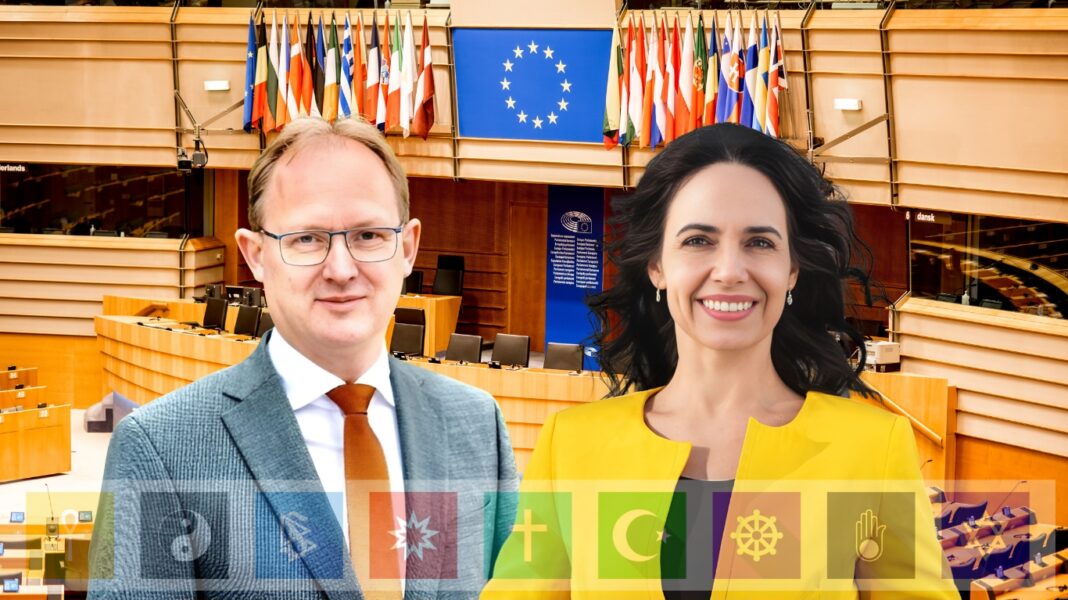
    Brussels – In a decisive move to enhance the protection of religious freedom across Europe and beyond, the European Parliament has re-established the Intergroup on Freedom of Religion or Belief. This initiative, confirmed during the conference of parliamentary leaders on December 11, 2024, aims to address the urgent need for safeguarding the rights of individuals facing persecution due to their faith.

    Co-chaired by Bert-Jan Ruissen (SGP, ECR) and Miriam Lexmann (EPP), the intergroup seeks to raise awareness about the plight of those persecuted for their beliefs.

    READ FULL ARTICLE HERE

  • United Nations experts call for immediate release of Yahaya Sharif-Aminu, denounce blatant human rights violations in Nigeria

    • Experts with the United Nations Working Group on Arbitrary Detention call for the immediate and unconditional release of Nigerian Yahaya Sharif-Aminu. 
    • Sharif-Aminu currently remains in prison while awaiting Supreme Court appeal following death sentence for sharing allegedly “blasphemous” song lyrics on WhatsApp; ADF International is supporting his appeal to the Supreme Court of Nigeria. 

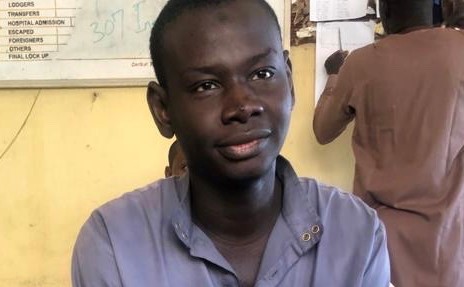
    GENEVA (3 DECEMBER 2024) The United Nations Working Group on Arbitrary Detention (WGAD) has called for the immediate release and reparations for Nigerian Yahaya Sharif-Aminu in a just-published opinion. Sharif-Aminu was sentenced to death by hanging in 2020 for sharing allegedly “blasphemous” song lyrics in a closed WhatsApp group. He is currently awaiting appeal at the Nigerian Supreme Court with the legal support of ADF International. 

    In their opinion, the WGAD finds that Nigerian authorities deprived Sharif-Aminu of various fundamental human rights in international law, including freedom of religion or belief and freedom of expression, and urges Nigerian authorities to “take the steps necessary to remedy the situation” without delay. The WGAD also urges the government of Nigeria to “ensure a full and independent investigation into the circumstances surrounding the arbitrary detention of Mr. Sharif-Aminu and to take appropriate measures against those responsible for the violation of his rights.” The full opinion can be read here. 

    READ FULL ARTICLE HERE

  • Religious Freedom Awards 2024: A Tribute to Coexistence and Human Dignity

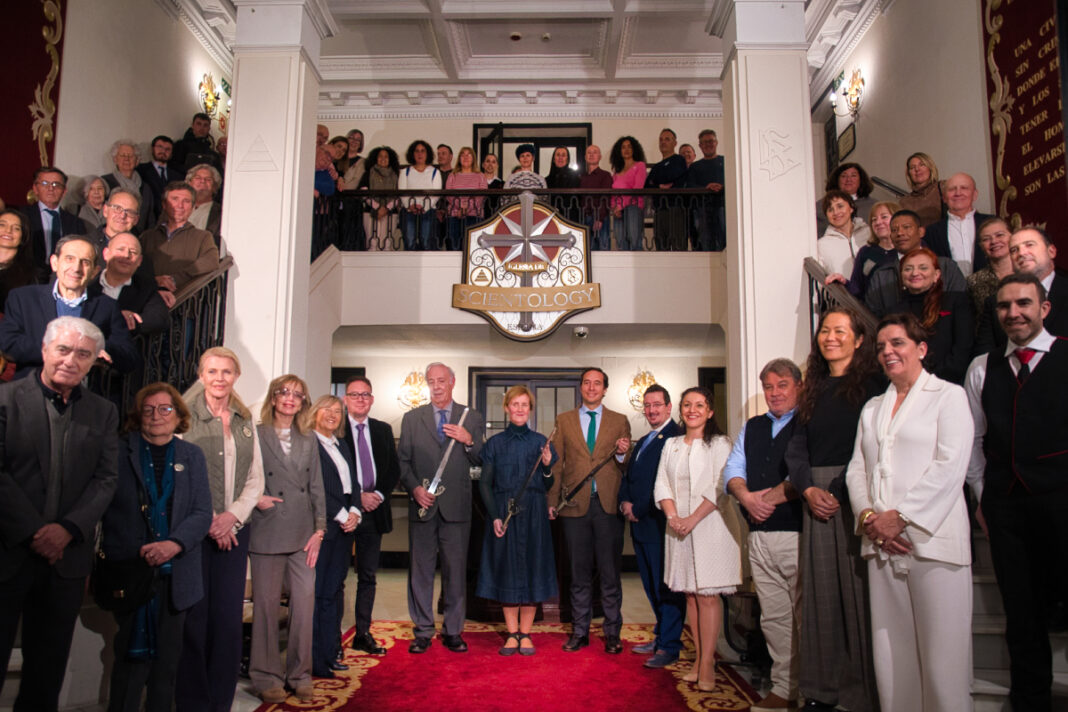
    Premios Global 2024 Scientology

    Religious Freedom // Last November 29, 2024, at the Church of Scientology of Spain, located just meters from the National Parliament in Madrid, the 11th edition of the Religious Freedom Awards, was held.

    This event, organized each year by the Foundation for the Improvement (Foundation MEJORA) of Life, Culture and Society (a Scientology foundation recognized by the United Nations), brought together academics, activists, and human rights defenders in an event that highlighted freedom of thought, religion and belief as a fundamental pillar of democracy and peaceful coexistence.

  • Ending Extrajudicial Violence Resulting from Apostasy and Blasphemy Laws

    A conversation on how to stop unjust violence against those who are accused of Apostasy or Blasphemy.

    Join us in hearing stories from advocates, activists and first hand witnesses to extrajudicial violence resulting from apostasy and blasphemy charges. Our aim is to bring attention to these egregious human rights violations and urge UN member states to work towards preventing future violence driven by an intolerance for freedom of conscience, religion and belief.

    Speakers include:

    Organized by

    Ex-Muslims of North America

    READ IN FULL & REGISTER THROUGH HERE

  • 60 years after the start of the case that would lead to his conviction for plagio

    by Alessandro Amicarelli — October 12, 2024 marks the 60th anniversary of a tragic event for the Italian democracy. On that date the Aldo Braibanti case, a judicial disgrace in a republican, democratic and anti-fascist Italy, began. All the more so because the defendant on trial would shortly be a young philosophy graduate, formerly on the Italian Communist Party’s central committee, formerly a partisan, accused of using plagio, the legal guise of brainwashing, to allegedly obtain sexual favors from younger boys. 

    Aldo Braibanti was a homosexual and in 1964 in Italy this was intolerable and therefore he had to be depicted to the public as a manipulative monster. The newspapers were competing for the headline, presenting him as the professor who had taken advantage of two young students. But Braibanti was not, nor was he ever, a professor, and those two “students,” were not his students but were in fact one a college student and the other an electrician, all the more both over the age of 18. The story is unbelievable and sounds like something taken from a medieval witch-hunting manual. 

    On Oct. 12, 1964, the father of one of those two boys, Ippolito Sanfratello, father of Giovanni, the alleged victim of plagio, filed a complaint with the Rome Public Prosecutor’s Office against Aldo Braibanti, accusing him of the crime of plagio for having induced his son, by entering his mind, to have sexual relations with him. Giovanni, according to another common chapter in the script of some countries, will be subjected to continuous electroshocks and held for a long time in an asylum under psychiatric care to be purified from plagio, or subjected to techniques that in the terminology of modern anti-cultists is called deprogramming, that they have long practiced after the kidnapping of the alleged victim.

    READ FULL ARTICLE HERE

  • The old myth of mental manipulation

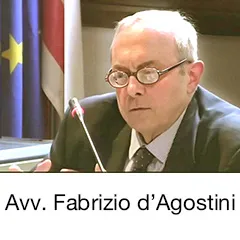
    Avv. Fabrizio d'Agostini

    by Fabrizio d’Agostini — Five association acronyms that state in their very name that their purpose is the defense of the victims of psychological abuses, have recently re-proposed, in a letter sent to some authorities, an “old” moan from the 1970s (mind war in the USA) about the lack of State’s attention to the spread of “pernicious conspiracy theories and pseudo-scientific beliefs” by “controversial aggregations” “that attack the fundamental rights of individuals and undermine democratic society itself” and it seems aimed at suggesting the appropriateness of greater institutional attention to the phenomenon and the appropriateness of the adoption of preventive measures (as recently adopted in France).

    One must read the text by reversing the arguments: the associations would like more attention and preventive measures from the State, and these demands, far from strengthening a democratic society, would be a diminution of the individual’s freedoms and a consequent diminution of democracy (also, infra).

    READ FULL ARTICLE HERE

  • The EU Special Envoy on Freedom of Religion or Belief on mission in Pakistan

    By Willy FautreThe EU Special Envoy on Freedom of Religion or Belief, Mr Frans van Daele, is on the eve of carrying out a fact-finding mission in Pakistan. The dates announced two months ago were 8-11 September and it was quite recently confirmed that he would be in Islamabad this week. At this stage, it is not known who will be his interlocutors as there was no official announcement about his mission, his program and his objectives.

    However, it can be expected that he will raise a number of issues concerning the egregious human rights violations particularly affecting local religious minorities and it is to be hoped that he will collect useful and concrete information for the European Commission in relation with the commercial privileges of the GSP+ status granted by the EU to Pakistan. Last but not least, we would recommend him that he visit a person imprisoned on blasphemy allegations. This would be an encouragement to all the religious prisoners of conscience – over 50 of them, according to the Database of documented cases of the US Commission on International Religious Freedom – and to Pakistani civil society.

    READ FULL ARTICLE of THE GENEVA TIMES – HERE

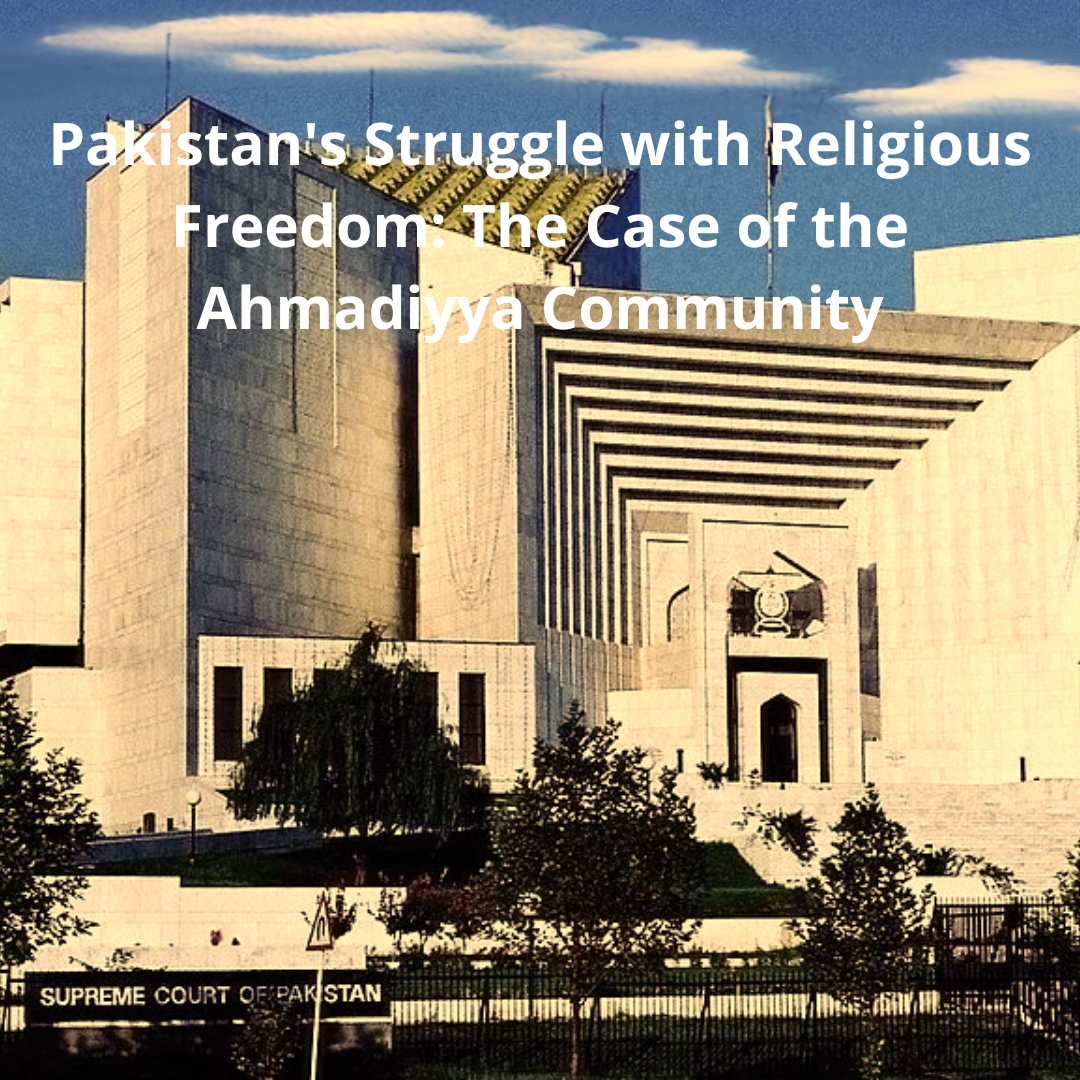
  • Pakistan’s Struggle with Religious Freedom: The Case of the Ahmadiyya Community

    In recent years, Pakistan has grappled with numerous challenges concerning religious freedom, particularly regarding the Ahmadiyya community. This issue has once again come to the forefront following a recent decision by the Pakistan Supreme Court defending the right to free expression of religious beliefs.

    The Ahmadiyya community, a minority Islamic sect, has faced persecution and discrimination in Pakistan for decades. Despite considering themselves Muslims, Ahmadis are deemed non-Muslims under Pakistani law due to their belief in Mirza Ghulam Ahmad as a prophet after Muhammad. This theological difference has subjected them to severe social, political, and legal marginalization, including restrictions on religious practices, hate speech, and violence.

    READ FULL ARTICLE HERE