Warning: include_once(/home/clients/4ae2c8d6ced67aaea1c30d6ecfb7d0e2/sites/web.ngoforbgeneva.org/wp-content/plugins/wp-super-cache/wp-cache-phase1.php): Failed to open stream: No such file or directory in /home/clients/4ae2c8d6ced67aaea1c30d6ecfb7d0e2/sites/web.ngoforbgeneva.org/wp-content/advanced-cache.php on line 22

Warning: include_once(): Failed opening '/home/clients/4ae2c8d6ced67aaea1c30d6ecfb7d0e2/sites/web.ngoforbgeneva.org/wp-content/plugins/wp-super-cache/wp-cache-phase1.php' for inclusion (include_path='.:/opt/php8.4/lib/php') in /home/clients/4ae2c8d6ced67aaea1c30d6ecfb7d0e2/sites/web.ngoforbgeneva.org/wp-content/advanced-cache.php on line 22
politics | NGO Committe on FoRB

politics

  • United Nations experts call for immediate release of Yahaya Sharif-Aminu, denounce blatant human rights violations in Nigeria

    • Experts with the United Nations Working Group on Arbitrary Detention call for the immediate and unconditional release of Nigerian Yahaya Sharif-Aminu. 
    • Sharif-Aminu currently remains in prison while awaiting Supreme Court appeal following death sentence for sharing allegedly “blasphemous” song lyrics on WhatsApp; ADF International is supporting his appeal to the Supreme Court of Nigeria. 
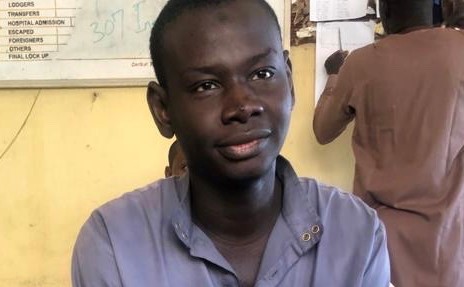
    GENEVA (3 DECEMBER 2024) The United Nations Working Group on Arbitrary Detention (WGAD) has called for the immediate release and reparations for Nigerian Yahaya Sharif-Aminu in a just-published opinion. Sharif-Aminu was sentenced to death by hanging in 2020 for sharing allegedly “blasphemous” song lyrics in a closed WhatsApp group. He is currently awaiting appeal at the Nigerian Supreme Court with the legal support of ADF International. 

    In their opinion, the WGAD finds that Nigerian authorities deprived Sharif-Aminu of various fundamental human rights in international law, including freedom of religion or belief and freedom of expression, and urges Nigerian authorities to “take the steps necessary to remedy the situation” without delay. The WGAD also urges the government of Nigeria to “ensure a full and independent investigation into the circumstances surrounding the arbitrary detention of Mr. Sharif-Aminu and to take appropriate measures against those responsible for the violation of his rights.” The full opinion can be read here. 

    READ FULL ARTICLE HERE

  • Call for input for Mary’s next report to the Human Rights Council on human rights defenders working in remote and rural areas

    Purpose: To inform the Special Rapporteur’s report on human rights defenders working in remote and rural areas, to be presented to the 58th session of the UN Human Rights Council in March 2025.


    Background

    In line with the Human Rights Council’s request to study trends, developments and challenges concerning human rights defenders (A/HRC/RES/16/5), the Special Rapporteur will focus her next thematic report on the situation of human rights defenders who, because of their geographic isolation, experience particular difficulties.

    It is widely recognized that human rights defenders working in remote or isolated areas are vital to the realization and enjoyment of human rights. Such areas can frequently only count on a weak presence of the state, are often neglected by human rights monitoring agencies, have fewer civil society support structures in place and receive less media attention. Human rights defenders in these areas also play a key role in ensuring the functioning and legitimacy of public institutions, processes and the rule of law.

    An environment in which human rights defenders can work safely is one of the pre-conditions for a healthy democracy. The Special Rapporteur has received continuous and increasing reports of the difficulties experienced by human rights defenders working in remote or isolated areas in accessing support and resources which should be readily available to them, threatening their work and their safety. They are also frequently excluded from meaningful consultation in matters which have a significant impact on their lives and livelihoods.

    She notes with concern that human rights defenders who work out of the national or international spotlight are often attacked, threatened, sidelined or undermined for their work peacefully promoting the rights of others. These attacks are invariably under-reported. Yet despite very challenging circumstances, some have achieved notable success in their work.

    The Special Rapporteur has identified remote and isolated defenders as a priority in her work, as outlined in her 2020 report the General Assembly (A/75/165), including through communications sent to governments and other actors, and meetings and consultations with human rights defenders in remote and isolated spaces.

    READ FULL CALL HERE.