Warning: include_once(/home/clients/4ae2c8d6ced67aaea1c30d6ecfb7d0e2/sites/web.ngoforbgeneva.org/wp-content/plugins/wp-super-cache/wp-cache-phase1.php): Failed to open stream: No such file or directory in /home/clients/4ae2c8d6ced67aaea1c30d6ecfb7d0e2/sites/web.ngoforbgeneva.org/wp-content/advanced-cache.php on line 22

Warning: include_once(): Failed opening '/home/clients/4ae2c8d6ced67aaea1c30d6ecfb7d0e2/sites/web.ngoforbgeneva.org/wp-content/plugins/wp-super-cache/wp-cache-phase1.php' for inclusion (include_path='.:/opt/php8.4/lib/php') in /home/clients/4ae2c8d6ced67aaea1c30d6ecfb7d0e2/sites/web.ngoforbgeneva.org/wp-content/advanced-cache.php on line 22
Pakistan’s Struggle with Religious Freedom: The Case of the Ahmadiyya Community | NGO Committe on FoRB

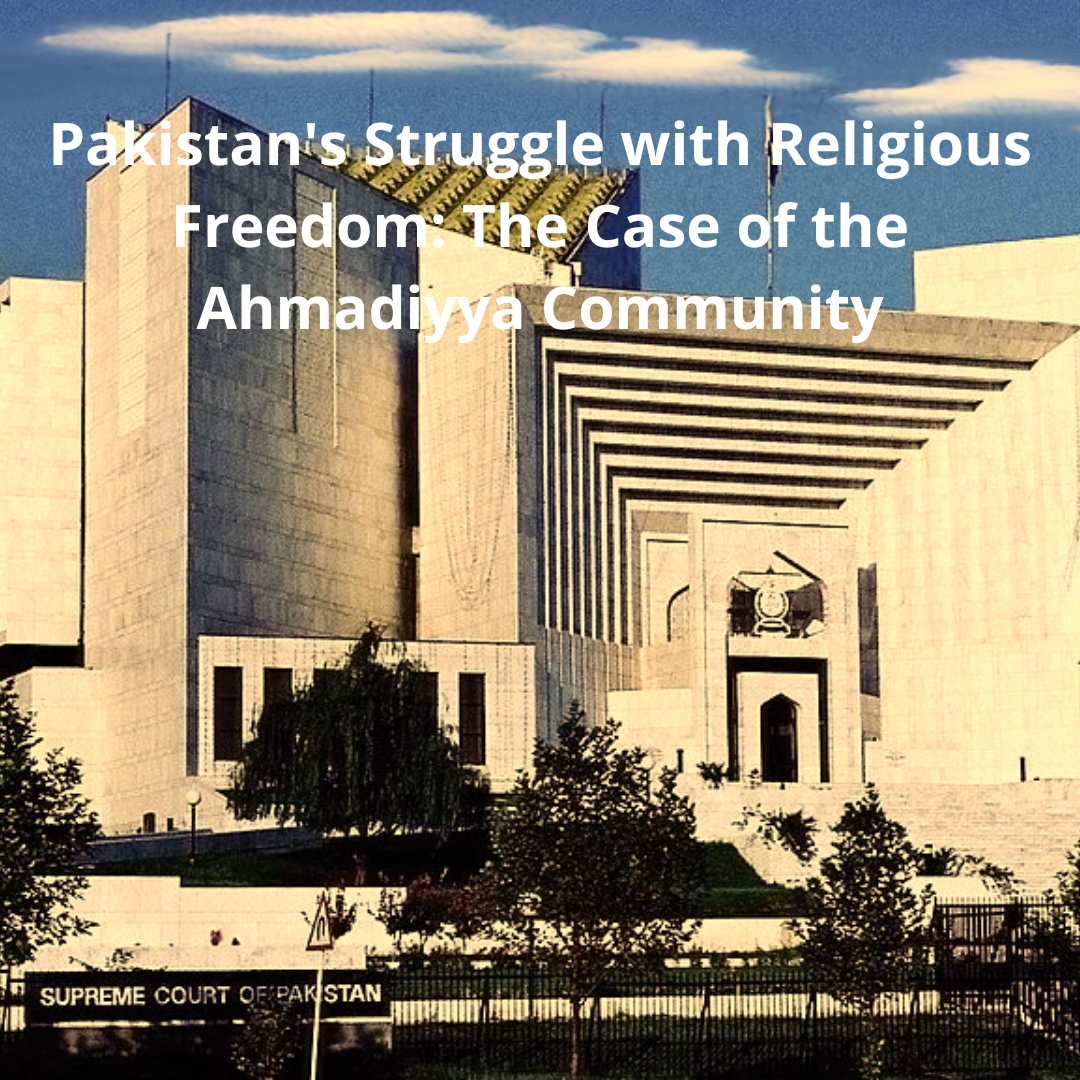
Pakistan’s Struggle with Religious Freedom: The Case of the Ahmadiyya Community

In recent years, Pakistan has grappled with numerous challenges concerning religious freedom, particularly regarding the Ahmadiyya community. This issue has once again come to the forefront following a recent decision by the Pakistan Supreme Court defending the right to free expression of religious beliefs.

The Ahmadiyya community, a minority Islamic sect, has faced persecution and discrimination in Pakistan for decades. Despite considering themselves Muslims, Ahmadis are deemed non-Muslims under Pakistani law due to their belief in Mirza Ghulam Ahmad as a prophet after Muhammad. This theological difference has subjected them to severe social, political, and legal marginalization, including restrictions on religious practices, hate speech, and violence.

READ FULL ARTICLE HERE